Archive for the ‘Business ethics’ Category
December 26, 2010
 While Republicans were digging in their heels to get tax breaks for millionaires and Democrats were demonizing them, 58 billionaires were promising to give away more than half of their wealth to philanthropic causes..
They’ve taken “The Giving Pledge,” an initiative of Warren Buffett and Bill and Melinda Gates “to make the world a better place.”
The names of Buffett and the Gates’s don’t appear on the website, givingpledge.org. They’re not into self-aggrandizement. In fact quite the opposite: when Buffett, reportedly the world’s third wealthiest person, decided to give away 99 percent of his wealth, he didn’t endow a Warren Buffett foundation: he decided that the Bill and Melinda Gates Foundation had all the right intentions and the right competence, so he decided to give it all to that going concern. He’s already given over six billion dollars to the foundation.
34.064458
-118.451661
Tags:Bill and Melinda Gates Foundation, Bill Gates, billionaires, charity, ethics, Melinda Gates, The Giving Pledge, Warren Buffett
Posted in Business ethics, Ethics-general, Philanthropy | 2 Comments »
September 2, 2010
 If you write a review of a friend’s book on Amazon should you disclose that you’re a friend? Even though it would diminish the impact of your review?
My friend and favorite author, Leora Krygier, raised some interesting questions about the ethics of reviewing books:
“Should reviewers disclose their leanings and prejudices, and their world view? And on the other side of the coin, what about all those reviews we authors ask our friends to write on Amazon? Should ‘friend’ connections be disclosed in honest reviewing? What about blurbs that come from authors who have the same publisher? Is that a conflict of interest? And reviews for money? Do we just stack it all up to ‘it’s okay because it’s just promotion?’ or is this an ethical issue that needs addressing?”
An ethics principle that almost always works is the “clear conscience” rule: reviewers should have a clear conscience—they shouldn’t hope that their background remains hidden. If I write a review on Amazon for Leora’s book I must disclose that she’s a friend, because there’s a clear conflict here: I hope her book succeeds and I want to write an honest review. If my publisher asks me to review a colleague’s book I have a slightly different conflict: I want to stay in my publisher’s good graces and I want to be honest. If I’m being paid for a review I want to please my patron and I want to be honest.
I’m not saying that I can’t be honest in my reviews; in fact I did love and admire Leora’s novel (more…)
34.064458
-118.451661
Tags:Amazon, authors, blurbs, conflict of interest, conscience, ethics, Leora Krygier, prejudices, promotion, review ethics, transparency
Posted in Business ethics, Ethics-general | 1 Comment »
August 22, 2010

Imane Boudlal, a 26-year old Muslim woman is free to wear a head scarf. The U.S. Constitution says so. Disneyland can’t discriminate against Ms Boudlal because of her religion. The Civil Rights Act of 1964 says so.
Ms. Boudlal works as a hostess at Disneyland’s Grand Californian Hotel, where employees are called “cast members.” She has worn Disney’s prescribed uniform for over two years, but has asked permission to wear a head scarf. Management told her they would try to get a Disney-appropriate headscarf, but seemed to be dragging their feet.
Ms. Boudlal ran out of patience after a couple of months and showed up for work Sunday wearing a hijab. She was told to either remove it or work out of the customers’ sight. She refused and was sent home—four times. Now she’s suing Disney.
Disney spokeswoman Suzi Brown said Disney has a policy not to discriminate. She said that Boudlal may work with the head covering away from customers while Disneyland tries to find a compromise that would allow her to cover her head in a way that fits with her hostess uniform.
“Typically, somebody in an on-stage position like hers wouldn’t wear something like that, that’s not part of the costume. We were trying to accommodate her (more…)
34.064458
-118.451661
Tags:cast members, Disneyland, ethics, freedom of religion, Grand Californian Hotel, head scarf, hijab, Imane Boudlal, job discrimination, Suzi Brown, The Civil Rights Act of 1964
Posted in Business ethics, Ethics-general, Tolerance | Leave a Comment »
August 10, 2010
 I recently offered a wallet-sized code of ethics to replace — or at least, mitigate — the bureaucratic system of rules, supervision and oversight that stifles initiative and deadens workers’ spirits. The ethical guides were simple:
I will:
· Do my best at work
· Avoid conflict of interest
· Speak truth to power
· Be a good citizen
· Shun any private gain from public employment
· Act impartially
· Treat others the way I would like to be treated
· Report waste, fraud, and corruption
When in doubt, my test is can I explain my actions to my mother or to my child.
Many people are hungry for this sort of simple, straightforward guide and have asked me how they can introduce such a tool in their organizations. Here’s what to do next:
· Decide on your organization’s principles of ethical behavior.
· Print wallet-size cards (plastic is best) and hand them out like crazy.
· Teach: look for coachable moments to align people with the principles.
First, what’s right for your organization? Chances are the code isn’t exactly right for you. Give the workers a chance to own the code. Announce that you’re in the market for a new code of ethics that can fit on a wallet-size card. Offer a $100 prize (your $100!) for the best one submitted, and (more…)
34.064458
-118.451661
Tags:Bureaucracy, code of ethics, ethics, mission statement, Organizational ethics, oversight, unenforceables
Posted in Business ethics, Ethics-general, Government, Organizational | 2 Comments »
July 1, 2010
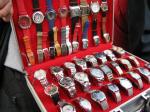 Rolex watches, Prada satchels, and Burberry scarves are nice, but not that nice. For far less than these cost you can get similar items that keep time better, hold more, and keep your neck warmer. Rolex-, Prada-, and Burberry-labeled goods are so desirable because they are positional goods. That’s the economists’ term for products whose value lies in their scarcity.
You can buy a genuine Rolex for $3960 at Amazon.com, or you can buy a knock-off at iReplicaStore.com for $115. Or on the street for $10. You won’t be able to tell the difference. The price comparisons for Prada and Burberry are similar. The real things sell for $1398 and $150, respectively, while the fakes go for $110 and $18 on the internet, much less on the street.
So what’s a person to do? You can fool everybody for a tenth the cost. And you won’t be alone: lots of people do it, even brag about their ten dollar Rolex. But “everybody does it” doesn’t make it ethical. The law gives Rolex, Prada, and Burberry exclusive use of their designs and labels. It’s called their intellectual property. You’d be stealing the intellectual property of the real brand. An ethical person doesn’t do that.
But maybe there’s another reason to shun knock-offs (more…)
34.064458
-118.451661
Tags:Amazon.com, Burberry positional goods, cheating, deception, Economist, ethics, fake designer goods, intellectual property, iReplicaStore.com, knock-offs, Prada, Rolex, scarcity, self-esteem, University of North Carolina
Posted in Business ethics, Ethics-general | 5 Comments »
June 28, 2010
 I watched the USA soccer team win its group in the World Cup, then lose to Ghana in the knockout round. Then I turned to my second favorite team, Brazil. I’m part of a World Cup television audience of more than a billion fans, and like most of them I lusted after the official team jerseys—a white USA shirt, perhaps, with number 10, Donovan, on the back, or a brilliant yellow and green Brazil shirt, also with number 10, Kaká. No, I think I like best the red and green number seven jersey of the world’s best player, Portugal’s Christiano Ronaldo. Seventy dollars for the home jersey, sixty for the more colorful away version. But I won’t be buying any.
All these official jerseys are made by Nike. Well, actually, Nike doesn’t make any sports gear. The shirts are made by a Nike contractor in Indonesia, whose workers earn $4/day, barely enough to pay rent, transportation, water, and two small bowls a day of rice and vegetables.
Nike long ago took the position that it has no responsibility for the pay or working conditions in the factories that make Nike gear, but over the past ten years it has slowly (more…)
34.064458
-118.451661
Tags:Brazil, Business ethics, Christiano Ronaldo, ethics, Indonesia, Jim Keady, Kaká, Landon Donovan, Los Angeles Times, Nike, Nike contractor, Portugal, team jerseys, USA soccer, working conditions, World Cup
Posted in Business ethics, Ethics-general, International, Sports | Leave a Comment »
May 26, 2010
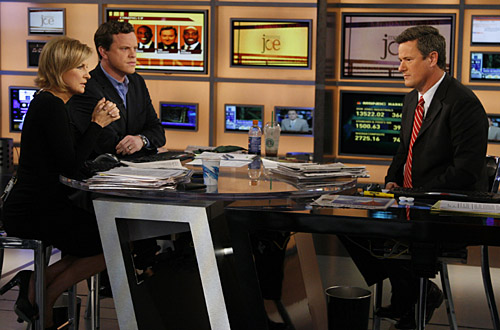
 My favorite TV program is MSNBC’s Morning Joe. The hosts are conservative ex-Congressman Joe Scarborough, liberal television journalist Mika Brzezinski, and humorist/sports fan Willie Geist. While their politics are very different, they are intelligent and good natured as they talk about the world. They have interesting and nice guests—the kind of people you’d enjoy having over for dinner.
So I was disappointed Wednesday morning when, after Mika introduced a report by NBC reporter George Lewis on the threat to public health posed by super-sized restaurant meals, Joe and Willie and guest Mike Barnicle started clowning and joking about how great it was to eat huge meals at the restaurants identified by the Center for Science in the Public Interest as contributing to America’s epidemic of obesity.
CSPI cited P. F. Chang’s double pan fried noodle combo (1820 calories), California Pizza Kitchen’s tostada pizza with grilled steak (1680 calories), and the king of the gorge plates, Cheesecake Factory’s pasta carbonara with chicken, weighing in at 2500 calories and 85 grams of saturated fat. That’s 250 more calories than the Mayo Clinic recommends for an average fairly active man in an entire day. Clearly such meals consumed regularly are deadly. No joke. Not funny, Joe. (more…)
34.064458
-118.451661
Tags:Amos and Andy, California Pizza Kitchen, calories, Center for Science in the Public Interest, Cheesecake Factory, comedians, double pan fried noodle combo, drunk routines, drunkenness, epidemic, George Lewis, Joe Scarborough, Mayo Clinic, Mika Brzezinski, Mike Barnicle, Morning Joe, MSNBC, obesity, P. F. Chang, pasta carbonara with chicken, public health, restaurant meals, saturated fat, television, tostada pizza with grilled steak, Willie Geist
Posted in Business ethics, Education, Entertainment, Ethics-general | 4 Comments »
May 17, 2010
 Lena Horne died last week at 92. I only knew of two prominent African-Americans when I was growing up in segregated Wilmington, Delaware. One was heavyweight boxing champion Joe Louis, and the other was singer Lena Horne. I knew she was a good singer, and quite beautiful, but I didn’t know anything else. I’m indebted to Jack Marshall’s EthicsAlarms.com blog for educating me about her groundbreaking role in the civil rights movement.
Marshall called Horne “Ethics Hero Emeritus” for her relentless fight against segregation and her principled refusal to play demeaning roles in the racist Hollywood environment of the 1930s, 1940s, and 1950s. Her career suffered, and she finally left Hollywood for Europe, where people didn’t seem to care much about her skin color.
There’s a fascinating PBS Fresh Air program, broadcast on May 14, that replays an interview that host Terry Gross conducted with Horne’s daughter, Gail Lumet Horne, in 1986. Listen to it for an inspiring story of this heroic woman.
var sc_project=6152467;
var sc_invisible=1;
var sc_security=”2276aa67″;
34.064458
-118.451661
Tags:African Americans, civil rights, Ethics Hero, EthicsAlarms, Fresh Air, Gail Lumet Horne, Hollywood, Jack Marshall, Joe Louis, Lena Horne, segregation¸ Wilmington Delaware, Terry Gross
Posted in Business ethics, Entertainment, Ethics-general, Tolerance | Leave a Comment »
May 15, 2010
 I’ve written here about how I recently left a wallet with all my credit cards and $300 in cash in an Istanbul Starbucks, and how the finder tracked me down and returned it intact. I had a similar experience in Turkey several years before. Good thing I didn’t do that in Silicon Valley, where Apple engineer Gray Powell left a priceless prototype of Apple’s next edition of the iPhone in a Redwood City bar. Brian Hogan, a 21-year-old college student, found the phone and shopped it around, finally selling it to technology blog Gizmodo for $5,000.
Hogan’s roommate, Katherine Martinson, said she and other friends tried to talk Hogan out of selling the phone, arguing it would ruin the career of the Apple engineer who lost it. Hogan responded,
“Sucks for him. He lost his phone. Shouldn’t have lost his phone.”
He sure shouldn’t have lost it where Brian Hogan could find it, steal it, and sell it. He should have lost it in Istanbul where it would have been quickly returned to him.
var sc_project=6152467;
var sc_invisible=1;
var sc_security=”2276aa67″;
34.064458
-118.451661
Tags:Apple, Brian Hogan, ethics, Gizmodo, Gray Powell, iPhone, Istanbul, Katherine Martinson, lost wallet, Redwood City, Silicon Valley, Starbucks, Turkey
Posted in Business ethics, Ethics-general, International | 2 Comments »
May 14, 2010
 “What’s the right thing to do here?”
That’s the very first line of the autobiography of billionaire Meg Whitman, candidate for the Republican nomination for California governor. She paints herself as the ethical candidate: “No playing things loose or close to the edge. We were going to do things the right way.” That’s an unnamed eBay executive talking in a campaign ad about working for Whitman back then. When Forbes Magazine did a 2007 cover story on Whitman they enthused, “Ebay’s Meg Whitman built a retail leviathan without sacrificing her customers, shareholders or ethics.”
But politicians claiming they’re particularly ethical are like gangsters shouting, “Come and get me, copper.” The press, like the cops, usually accepts the challenge, a la John Edwards, Gary Hart, Eliot Spitzer, and others.
If you watch television in California you already know about Whitman’s ethics, displayed in $60 million worth of the skuzziest campaign ads imaginable. But her hyper-negative campaign against fellow Republican Steve Poizner isn’t the most interesting thing about Whitman’s campaign.
Try googling “Meg Whitman ethics.” It turns up 48,800 entries. There are the articles about her sweetheart deal with Goldman Sachs, in which she moved the banking business of eBay, which she headed, to Goldman Sachs in return for the inside track on an initial public stock offering (IPO) in which she made a quick $1.78 million. When eBay shareholders sued she agreed to give her ill-gotten gains (more…)
34.064458
-118.451661
Tags:California governor, campaign ads, Craigslist.com, eBay, Eliot Spitzer, ethics, Forbes Magazine, Gary Hart, Goldman Sachs, Hurricane Katrina, IPO, John Edwards, Los Angeles Times, Meg Whitman, Republican nomination, Steve Poizner
Posted in Business ethics, Ethics-general, Politics | 3 Comments »
 While Republicans were digging in their heels to get tax breaks for millionaires and Democrats were demonizing them, 58 billionaires were promising to give away more than half of their wealth to philanthropic causes..






 Ethics Bob