May 11, 2010
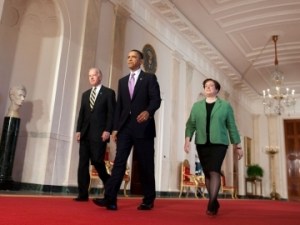 President Obama’s Supreme Court nomination of Elena Kagan is expected to breeze through the Senate, largely because of the absence of a “paper trail” –written opinions that a nominee who is a judge would have left for inspection. For example Republican opposition to Sonia Sotomayor crystallized around her opinion in the New Haven firefighter suit, which was wrongly characterized as Sotomayor favoring unqualified minorities over hard-working qualified whites. Kagan has left no signed opinions to be swift-boated about.
Her only sin, it appears, is to have refused to allow Harvard Law School, which she headed, to cooperate with military recruiters because the military discriminated against gays with its “Don’t ask, don’t tell” (DADT) policy.
Administration officials give an energetic lawyerly defense of Kagan’s position: she didn’t draft the policy and it was in place before she became dean. The military was allowed to recruit at Harvard, they just couldn’t get help from the law school’s career services office.
Kagan explains that DADT discriminates against gays. Surely it does. She opposes it. So does JCS Chairman Admiral Mike Mullen and probably the 90 percent of the military under the age of 25. So do I. So what.
DADT is not—and never was—merely anti-gay policy of bigoted generals. It was the law of the land, enacted in 1993 to prevent President Clinton from allowing openly gay people to serve. When Harvard—and Kagan—opposed cooperation with military recruiters they were opposing legitimate national defense activity, being carried out in accordance with the law.
Or perhaps Harvard policy trumps law? I hope that’s not the explanation of a Supreme Court nominee. Stay tuned.
Read The Ethics Challenge: Strengthening Your Integrity in a Greedy World
34.064458
-118.451661
Tags: DADT, Don’t ask, don’t tell, Elena Kagan, Harvard Law School, JCS Chairman Mike Mullen¸ Clinton, military recruiters, New Haven firefighter suit, Sonia Sotomayor, Supreme Court
Posted in Ethics-general, military, Politics, Tolerance, Uncategorized | 4 Comments »
May 9, 2010
 If you’re in business you don’t want to offend your customers. Not even half of them. That’s why you avoid taking a public position on controversial issues. If asked you just say, “I don’t know about that,” or That’s politics, my game is basketball,” or whatever.
So what do you do when you think your state has acted against “our basic principles of equal rights and protection”? If you’re in business in Arizona you keep your mouth shut. Why alienate the 70 percent of Arizonans who favor the state’s new legislation to crack down on illegal immigrants and those who help them or hire them? Or else why alienate the majority of Latinos who despise the new law?
Why? Because you believe in something and you believe it’s your duty to speak up. Robert Sarver, owner of the National Basketball Association’s Phoenix Suns, had his team wear special jerseys emblazoned with Los Suns for the playoff game on May 5, Cinco De Mayo, the day that Mexican Americans celebrate their Mexican heritage.
Amid the rancor over the new law, Sarver said he was taking the controversial action “to honor our Latino community and the diversity of our league, the state of Arizona, and our nation.”
Hooray for Sarver and Los Suns.
34.064458
-118.451661
Tags: Cinco De Mayo, illegal immigrants, Immigration law, Latinos, Los Suns, Mexican Americans, National Basketball Association, Phoenix Suns, Robert Sarver
Posted in Ethics-general, Politics, Sports, Tolerance, Uncategorized | 4 Comments »
April 29, 2010
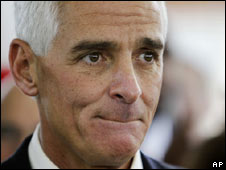 Florida Gov. Charlie Crist today announced his candidacy for Florida’s open Senate seat. Crist had been a huge favorite to win, but as the anti-incumbent fever grew Florida House Speaker Marco Rubio swept far past Crist in the polls of Republican primary voters.
Crist is a centrist Republican, a breed that is rapidly becoming extinct. Seeing no chance to win the Republican primary that had appeared his for the taking a few months ago, Crist announced today that he would contest the November election as an independent.
Is it ethical for a politician to change parties? It depends. When Pennsylvania voters reelected Arlen Specter to a fifth Senate term in 2004 they elected him as a Republican—an affiliation he had embraced ever since changing from a Democrat in 1965 to challenge the Democratic district attorney of Philadelphia. Specter saw his growing estrangement from the people who vote in the Republican primary, decided he had little chance to be nominated for reelection, so, Presto! He became a Democrat. Specter’s move was unethical: Read the rest of this entry »
34.064458
-118.451661
Tags: Arlen Specter, but reneging on your commitment? That’s different. It’s unethical and unforgettable. Charlie Crist, Changing parties isn’t necessarily unethical, Chris Wallace, ethics, Florida Senate, Fox News Sunday, Independent, Kendrick Meek, Marco Rubio, Republican primary
Posted in Ethics-general, Politics | 2 Comments »
April 28, 2010
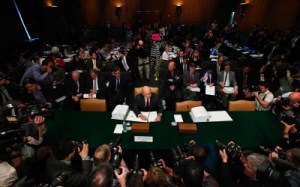 The Senate held a ten-hour hearing yesterday on Goldman Sachs’s role in the financial crisis. The question for the committee was whether new laws were needed to reform the financial system; the question for me was whether Goldman Sachs—America’s most prestigious investment bank—was serious about ethics.
The hearing was long, the members were irritable, the subject was complicated, and the Goldman Sachs executives were evasive when asked such tough questions as whether they had any obligation to act in the best interest of their clients. But two exchanges tell us unequivocally about ethics at Goldman Sachs. First, Chairman Carl Levin (D-MI) and Goldman Sachs Chief Financial Officer David Viniar.
LEVIN: And when you heard that your employees, in these e-mails, when looking at these deals said, God, what a shitty deal, God what a piece of crap — when you hear your own employees or read about those in the e-mails, do you feel anything?
VINIAR: I think that’s very unfortunate to have on e-mail. [Laughter and groaning from the audience]
LEVIN: On an e-mail?
VINIAR: Please don’t take that the wrong way. I think it’s very unfortunate for anyone to have said that in any form.
LEVIN: How about to believe that and sell them? Read the rest of this entry »
34.064458
-118.451661
Tags: Carl Levin, clients, David Viniar, e-mails, ethics, financial reform, Goldman Sachs, Lloyd Blankfein, Senate hearing¸ financial crisis, shitty deal
Posted in Business ethics, Ethics-general, Politics | 2 Comments »
April 24, 2010
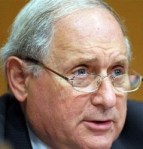
 In the wake of Wall Street scandals, collapses, bailouts, bonus billions, record profits, and now, according to the SEC, charges of fraud, the big show moves to Washington on Tuesday when the Senate Permanent Subcommittee on Investigations, chaired by Carl Levin (D-MI) will grill Lloyd Blankfein, Goldman Sachs CEO, and six current and former Goldman people, including Fabrice “Fabulous Fab” Tourre. The show starts at 10 AM EDT.
Levin is a very bright, very tough, inquisitor who is not one of the 46 senators who have gotten major contributions from Goldman. Nor is the ranking Republican, Tom Coburn (R-OK). The committee has a long history of changing Americans’ attitudes and behaviors, going back to 1921. It may well start to change the way Americans think about ethics and business.
Blankfein will testify last. He’ll face an awful dilemma: Will he defend Goldman’s behavior—described by Business Week’s Michael Lewis as creating a billion dollar bond package to fail, tricking and bribing the ratings agencies into blessing the package, then selling it to a slow-witted German?
Or will he say that Fabulous Fab’s deal was inconsistent with Goldman’s ethical standards, and thereby give credence to the SEC’s charge of fraud?
What would you do?
34.064458
-118.451661
Tags: bailouts, bonus billions, Carl Levin, ethics, Fabrice “Fabulous Fab” Tourre, fraud, Goldman Sachs, Lloyd Blankfein, Michael Lewis, ratings agencies, SEC, Senate Permanent Subcommittee on Investigations, Tom Coburn, Wall Street
Posted in Business ethics, Ethics-general, Finance, Politics | 3 Comments »
April 23, 2010
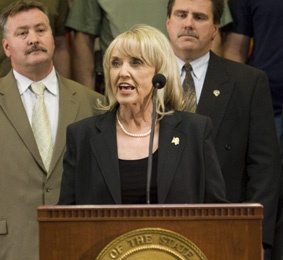 Arizona Gov. Jan Brewer today signed into law what President Obama had just called an irresponsible act that “threaten[s] to undermine basic notions of fairness that we cherish as Americans, as well as the trust between police and their communities that is so crucial to keeping us safe.”
The new law makes it a crime to lack proper immigration paperwork and requires police, if they have reasonable suspicion that someone is in the country illegally, to determine their immigration status. It also bars people from soliciting work as day laborers.
The President made his remarks at a naturalization ceremony for 24 active-duty military people. He acknowledged that the Arizona action resulted from “our failure to act responsibly at the federal level,” as he called for Congress to enact comprehensive immigration reform.
So we now wait and see whether the new law increases or decreases the security of the people of Arizona. To her credit, Gov. Brewer spoke forcefully about her determination not to tolerate racial profiling by police officers. On the other hand, when a reporter asked her what an illegal immigrant looked like, she answered simply, “I don’t know.”
She said she signed the law to combat the “murderous greed of drug cartels, drop houses, kidnappings, and violence.” We can expect that the murderous greedy drug kingpins will no longer congregate in Wal-Mart parking lots looking for day labor.
Read The Ethics Challenge: Strengthening Your Integrity in a Greedy World
34.064458
-118.451661
Tags: Arizona law, comprehensive immigration reform, day laborers, drop houses, drug cartels, ethics, fairness, immigration, Jan Brewer, kidnappings, naturalization ceremony, police, President Obama, racial profiling, reasonable suspicion, Wal-Mart parking lots
Posted in Ethics-general, military, Politics, Tolerance | 3 Comments »
April 22, 2010
 If you lost a wallet with credit cards, a driver’s license, and $300, what would your chances be of getting it back? Depends on where you lost it, right? It would be interesting to know the chances by location—are Minnesotan more honest than New Yorkers? Or are Germans more honest than Italians? We don’t know.
But one thing I do know: if you’re going to lose your wallet, do it in Turkey.
Last month in an Istanbul Starbucks I reached for my wallet and it wasn’t there. I had just ridden in a packed tram, and I figured that I had lost it or had my pocket picked in the tram. Several hours later—11 pm, when I was in bed—I was awakened by a call from Enver Beyazyuz, a businessman who frequents that Starbucks. He had found my wallet on the men’s room floor, turned it over to the store manager, then had second thoughts: he wasn’t certain the manager, busy as he was, would make every effort to find the wallet’s owner. So he went back to Starbucks, asked to see the wallet again, found a business card of the hotel, and tracked me down. Read the rest of this entry »
34.064458
-118.451661
Tags: Enver Beyazyuz, ethics, honesty, Istanbul, lost wallet, Starbucks, Turkey
Posted in Ethics-general, International | 2 Comments »
April 20, 2010
 After the Securities and Exchange Commission last Friday charged America’s most respected financial firm, Goldman Sachs, with defrauding investors, CNN’s Rick Sanchez asked, “Is it OK to cheat as long as it’s not illegal?”
Goldman says no: CEO Lloyd Blankfein left a voicemail on every Goldman worker’s phone saying,
“Goldman Sachs has never condoned and would never condone inappropriate activity by any of our people. On the contrary, we would be the first to condemn it and take immediate and appropriate action.”
We’ll see. According to the SEC complaint, Goldman Sachs was approached by hedge fund operator John Paulson (no relation to ex-Treasury secretary and ex-Goldman CEO Henry Paulson), who wanted to bet against sub-prime mortgages—that is, he wanted to bet that their value would fall as their riskiness became clear and as borrowers defaulted.
Working with G-S vice president Fabrice Tourre (“Fabulous Fab,” as he called himself), Paulson hand-picked a billion dollar portfolio of mortgage-backed securities that he considered the absolute riskiest and most likely to fail. Read the rest of this entry »
34.064458
-118.451661
Tags: civil fraud, defrauding investors, Fabrice Tourre, Fabulous Fab, Goldman Sachs, hedge fund, Henry Paulson, John Paulson, Lloyd Blankfein, mortgage-backed securities, Rick Sanchez, SEC, Securities and Exchange Commission, sub-prime mortgages, voicemail
Posted in Business ethics, Ethics-general | 2 Comments »
April 19, 2010
 Sport builds character. So we say, and we stick to the idea even as our favorite slugger takes illegal performance-enhancing drugs and lies about it, and our favorite football coach grins while his players taunt an outmatched opponent. But there are people of character in sport. Today’s ethical sportsman is English golfer Brian Davis, who called a two-stroke penalty on himself that ended his chance to win the Verizon-Heritage golf tournament. Davis’s violation was to barely—imperceptibly to anyone else—nudge a reed that overhung his ball in a sandy hazard. Davis finished second, and earned $411,000 less than Jim Furyk, the winner. There’s an excellent report of the incident in The New York Times.
Golfers tend to downplay their ethical behavior, shrugging it off as part of the game. Wouldn’t it be nice if it were part of all games!
34.064458
-118.451661
Tags: Brian Davis, character, Jim Furyk, lying, performance-enhancing drugs, Sport, taunting, The New York Times., Verizon-Heritage tournament
Posted in Ethics-general, Sports | Leave a Comment »
April 18, 2010
 Screaming Frog Productions has produced a gem of a movie that helped me to think about the issue of immigrants—legal and illegal—who congregate to seek work as day laborers. It was directed by Jonathan Browning and has been shown at over 150 film festivals all around the world and won over 30 awards. Watch The Job, a three-minute movie that changed the way I think of day laborers. And made me laugh heartily.
The great first century Jewish teacher, Hillel, was asked—according to the Talmud—by a cynic to teach him the whole law (Torah) while standing on one foot. That was easy for Hillel. “What is hateful to you, do not do to your neighbor. This is the whole Torah; all the rest is commentary. Go and learn it.”
Hillel was expressing the Golden Rule, which is at the center of ethical behavior in Judaism, Christianity, Islam, Hinduism, Shintoism, in fact in every religion we know of, dating from the earliest recorded history. It’s hard enough to practice the Golden Rule when your “neighbor” is literally your neighbor, but it gets progressively harder as the “neighbor” becomes more removed from one’s experience. The Job made it easier for me.
34.064458
-118.451661
Tags: day laborers, ethical behavior, ethics, Golden Rule, Hillel, immigrants, Jonathan Browning, Screaming Frog Productions, The Job
Posted in Ethics-general, International, Politics, Tolerance | 5 Comments »
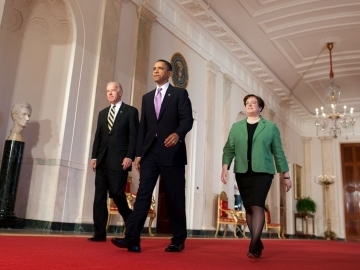 President Obama’s Supreme Court nomination of Elena Kagan is expected to breeze through the Senate, largely because of the absence of a “paper trail” –written opinions that a nominee who is a judge would have left for inspection. For example Republican opposition to Sonia Sotomayor crystallized around her opinion in the New Haven firefighter suit, which was wrongly characterized as Sotomayor favoring unqualified minorities over hard-working qualified whites. Kagan has left no signed opinions to be swift-boated about.




 Ethics Bob